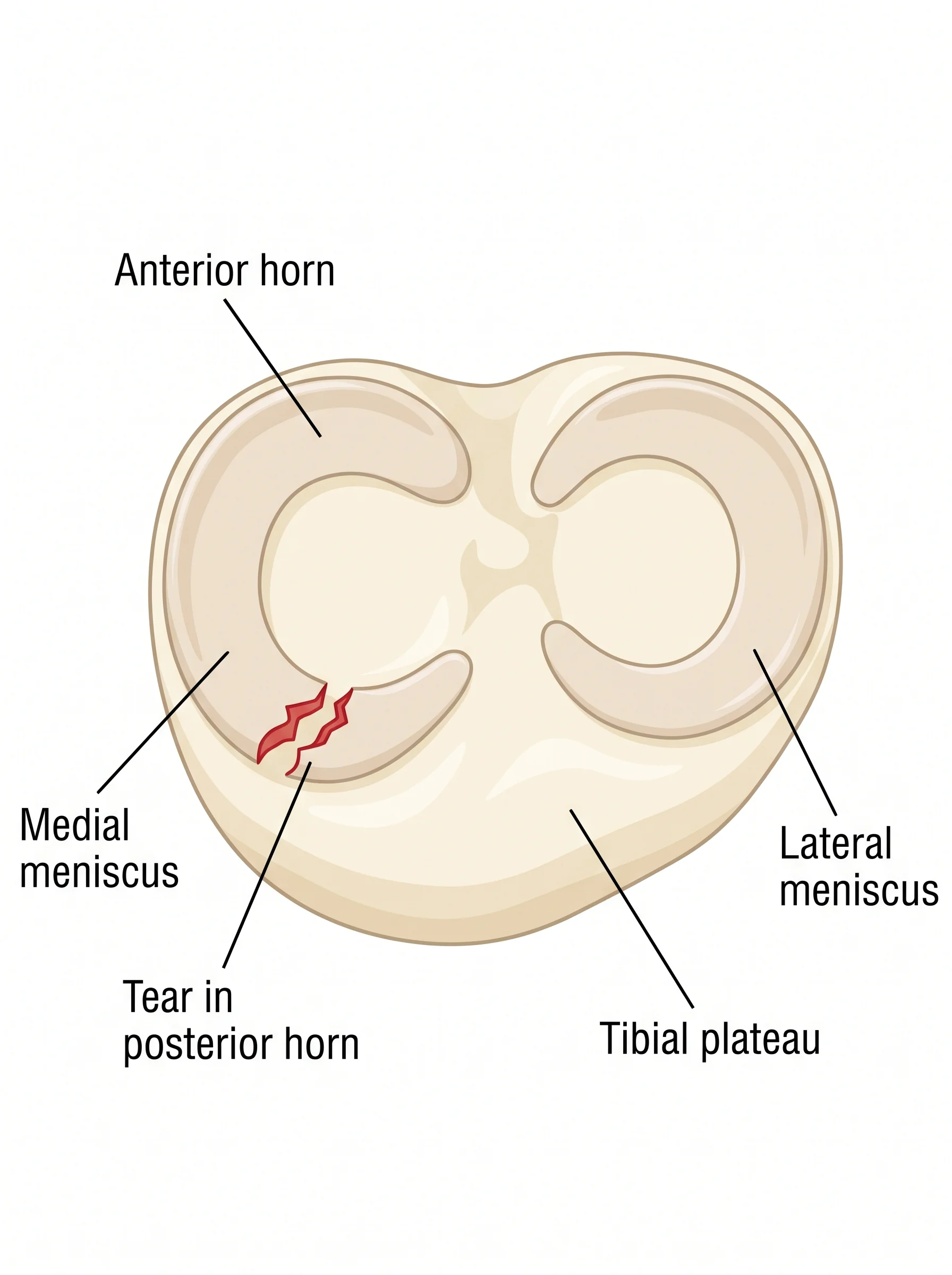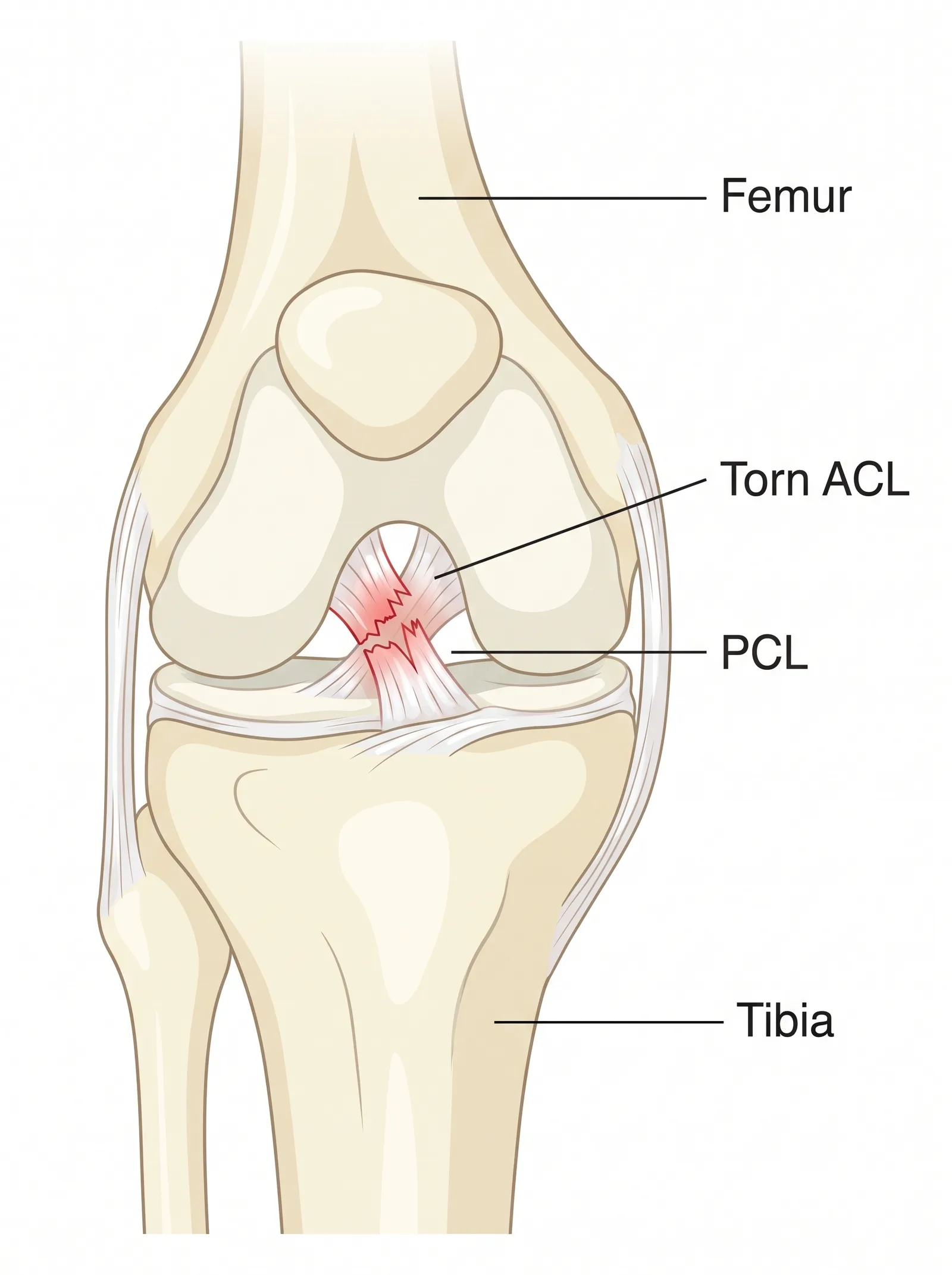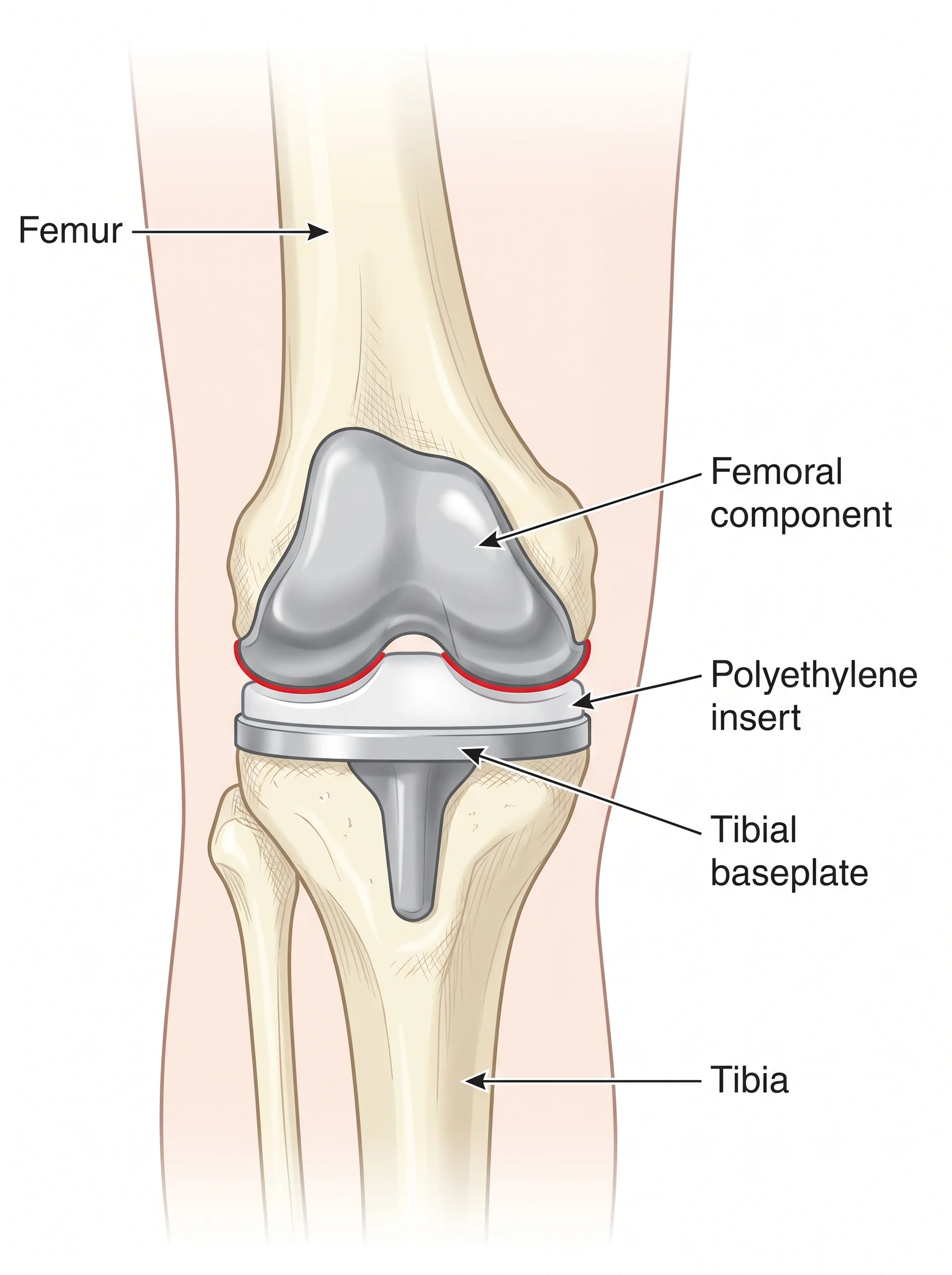
Total knee replacement is surgery that resurfaces a worn knee joint with metal and plastic parts. It is considered when arthritis pain limits daily life and other treatments no longer help. Most people walk with support the same day and rebuild strength over several months.
Jonathan Robinson performs total knee replacement in New York when it is the right step, and reviews every alternative with you first.
What is Total Knee Replacement?
Total knee replacement, also called total knee arthroplasty (the medical word for rebuilding a joint), is a surgery that removes the damaged surfaces of the knee and replaces them with man-made parts.
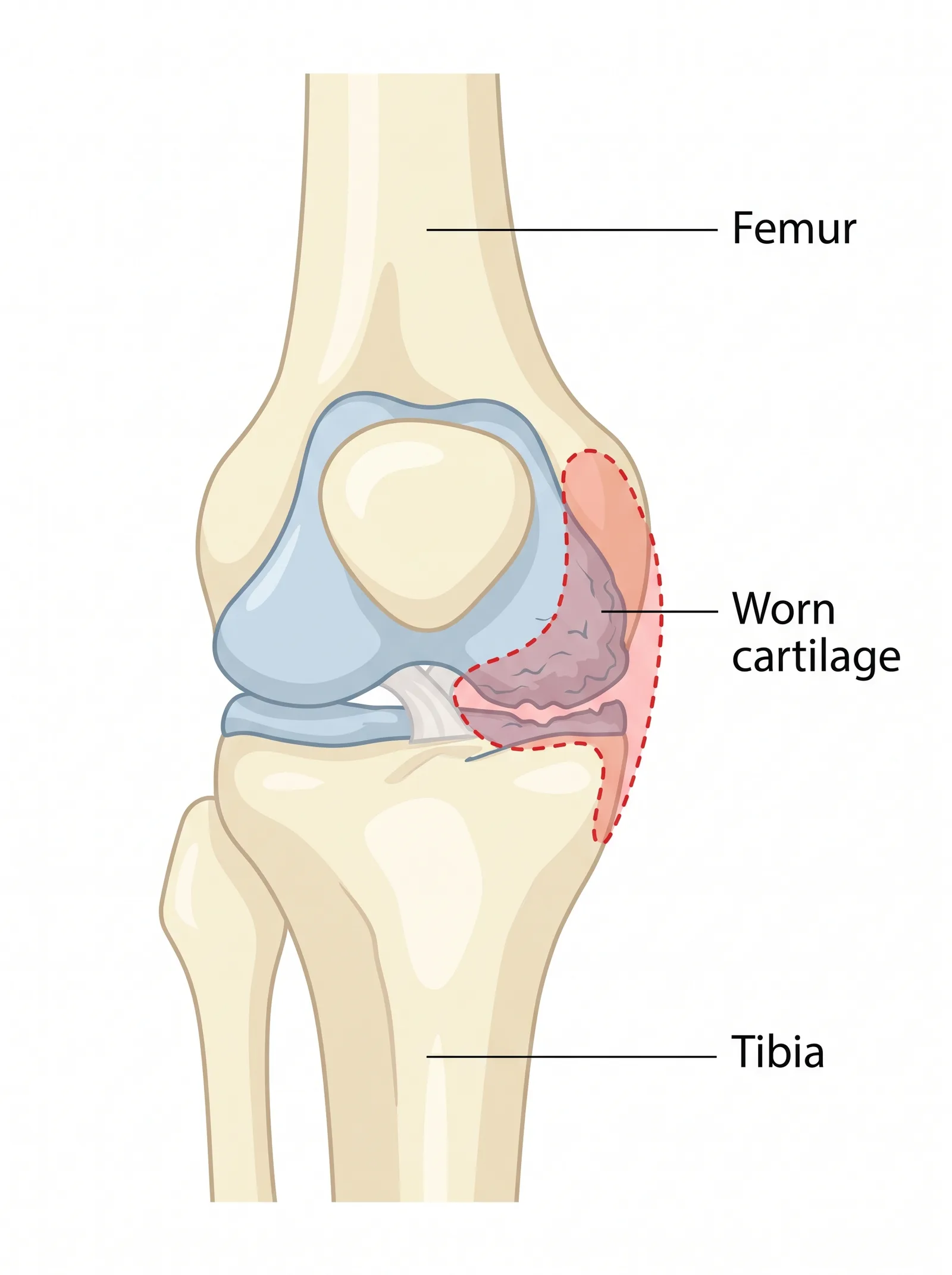
The knee is where the thighbone (femur) meets the shinbone (tibia), with the kneecap (patella) in front. A smooth layer called cartilage normally lets these bones glide. When arthritis (joint inflammation and wear) thins that cartilage, bone rubs on bone. That is what causes the deep, aching pain many people describe.
During the procedure, the surgeon caps the end of the thighbone and the top of the shinbone with metal, and places a smooth plastic spacer between them so the joint moves freely again. The back of the kneecap may also be resurfaced. The goal is to reduce pain and help you move more comfortably, not to make the knee feel exactly like it did at age twenty.
This is a deep-education page. For a shorter overview of this service, see our Total Knee Replacement service page, which links back here.
What are the symptoms of Total Knee Replacement, and when should you see a specialist?
Most people who reach knee replacement have lived with symptoms for a long time.
Common signs include the following.
- Knee pain that stays with you during rest or at night, not only with activity. - Stiffness that makes it hard to straighten or fully bend the knee. - Swelling that comes back after normal days. - A grinding or catching feeling inside the joint. - Trouble with stairs, standing from a chair, or walking a block. - Pain that has stopped responding to medicine, injections, or physical therapy.
It is reasonable to see a specialist when knee pain changes what you can do, not just how you feel. If you are avoiding stairs, cutting walks short, or losing sleep, an orthopedic surgeon (a doctor who treats bones and joints) can look at the whole picture. Seeking advice does not commit you to surgery. Many people leave a first visit with a plan that does not include an operation.
How is Total Knee Replacement diagnosed, and what does the visit involve?
A diagnosis visit is a conversation and an exam, not just a scan.
The surgeon will ask when the pain started, what makes it better or worse, and what you can no longer do. They will watch you walk, check how far the knee bends and straightens, and feel for swelling or looseness.
X-rays are usually taken in the office. Standing X-rays show how much space is left between the bones, which reflects how much cartilage remains. Sometimes an MRI (a scan that shows soft tissue) is ordered, but for arthritis, X-rays often tell most of the story. The surgeon puts the images together with your history to decide whether the joint damage matches your pain, and whether replacement is one reasonable option among several.
What is the natural course of Total Knee Replacement?
Arthritis tends to progress slowly over years.
Cartilage does not grow back on its own, so the general direction is toward less cushion over time, though the pace varies widely from person to person.
If you and your surgeon choose replacement, here is the usual sequence on surgery day:
- Anesthesia. An anesthesiologist (a doctor who manages sleep and pain control) gives you medicine so you feel nothing during surgery. This may be general anesthesia, where you sleep, or a spinal block that numbs the lower body, sometimes with medicine to keep you relaxed. - The incision. The surgeon makes a cut over the front of the knee to reach the joint. - Resurfacing. Worn cartilage and a thin layer of bone are removed from the end of the thighbone and top of the shinbone. - Placing the parts. Metal caps are fitted to the bone ends and a plastic spacer is set between them. The kneecap may be resurfaced too. - Checking motion. The surgeon bends and straightens the knee to confirm the parts move smoothly and the leg lines up well. - Closing. The incision is closed and a dressing is applied.
The surgery itself commonly takes one to two hours, though your time may differ.
What is the recovery timeline for Total Knee Replacement?
Recovery is measured by what you can do, not only by the calendar.
Milestones matter more than dates. The ranges below reflect general guidance from the American Academy of Orthopaedic Surgeons (AAOS), 2023. These are ranges, not promises.
First days. The milestone is standing and taking steps with a walker, and bending the knee a little more each day. Many people walk with support the same day or the next.
First weeks. The milestone is walking short distances, managing stairs one at a time, and doing daily tasks with less help. Many people move from a walker to a cane during this period.
Around six weeks. The milestone is walking longer, driving again once you can react safely and are off strong pain medicine, and returning to a desk job. According to general AAOS guidance, 2023, many people reach this stage within about six weeks, but this is a range, not a promise.
Three to six months. The milestone is steady, comfortable walking and returning to low-impact activities you enjoy. Swelling and stiffness continue to fade.
Up to a year. The milestone is full or near-full strength and endurance. General AAOS guidance, 2023, notes that improvement can continue for up to a year. These are ranges, not promises.
Physical therapy runs alongside these stages. Doing the exercises is one of the biggest things within your control.
Read the full guide to preparing for surgery →
Your own recovery instructions come from the office and are specific to you. This page describes the general course, not a plan to follow.
How should you prepare for Total Knee Replacement?
Preparing your home and your schedule ahead of time makes the first weeks smoother.
- Home setup. Clear walking paths of rugs and cords. Put daily items within easy reach so you avoid bending or climbing. A raised toilet seat, a shower chair, and a sturdy handrail can help. - Transportation. You will not be able to drive for a while, so arrange rides to follow-up visits and therapy. - Time off. Plan for several weeks away from a physical job, and about a few weeks from a desk job, though your timing may differ. - Who to have available. Have someone stay with you for the first days to help with meals, medicine, and getting around. - Pre-surgery health. Follow any instructions about medicines to pause, and let the office know your full medicine list.
Which warning signs should you call about?
After surgery, call the office if you notice the following.
- Fever, or redness, warmth, or fluid draining from the incision, which can signal infection. - Calf pain, or new swelling in the leg, which can signal a blood clot. - Sudden chest pain or trouble breathing. This is an emergency. Call 911. - Pain that keeps getting worse instead of slowly easing. - The knee giving way, locking, or a new inability to bear weight.
When in doubt, call the office. The team would rather hear from you early. For anything that feels like an emergency, call 911.
What results can you expect from Total Knee Replacement?
Total knee replacement has a long track record.
According to general AAOS guidance, 2023, most people have meaningful pain relief and better function after recovery. Research summarized by AAOS, 2023, reports that a large majority of modern knee replacements are still working well many years after surgery, often cited in the range of 15 to 20 years or more. These are ranges drawn from group data, not promises about any one person.
Results depend on many things, including your starting health, the reason for surgery, and how consistently you do your therapy. The office can talk through what the evidence means for your situation.
What are the treatment options?
- 01Activity changesSwitching to low-impact movement such as swimming or cycling can lower stress on the joint.
- 02Weight managementEven a modest reduction in body weight lowers the load the knee carries with every step.
- 03Physical therapyGuided exercises strengthen the muscles around the knee, which can share the load and steady the joint.
- 04MedicineOver-the-counter pain relievers or anti-inflammatory drugs (medicines that reduce swelling), used as directed, may ease symptoms.
- 05InjectionsA shot of corticosteroid (an anti-inflammatory medicine) can quiet a flare. Some people try other injection types, and the office can explain what fits your situation.
- 06Braces and supportsA brace can shift weight away from the worn part of the knee.
What do patients ask most?
How long will I be in the hospital?+
Will my knee set off airport metal detectors?+
How do I handle insurance and cost questions?+
Can I kneel afterward?+
What activities should I avoid?+
Fellowship trained at Lenox Hill Hospital. Sees patients in New York.
About Dr. Robinson →