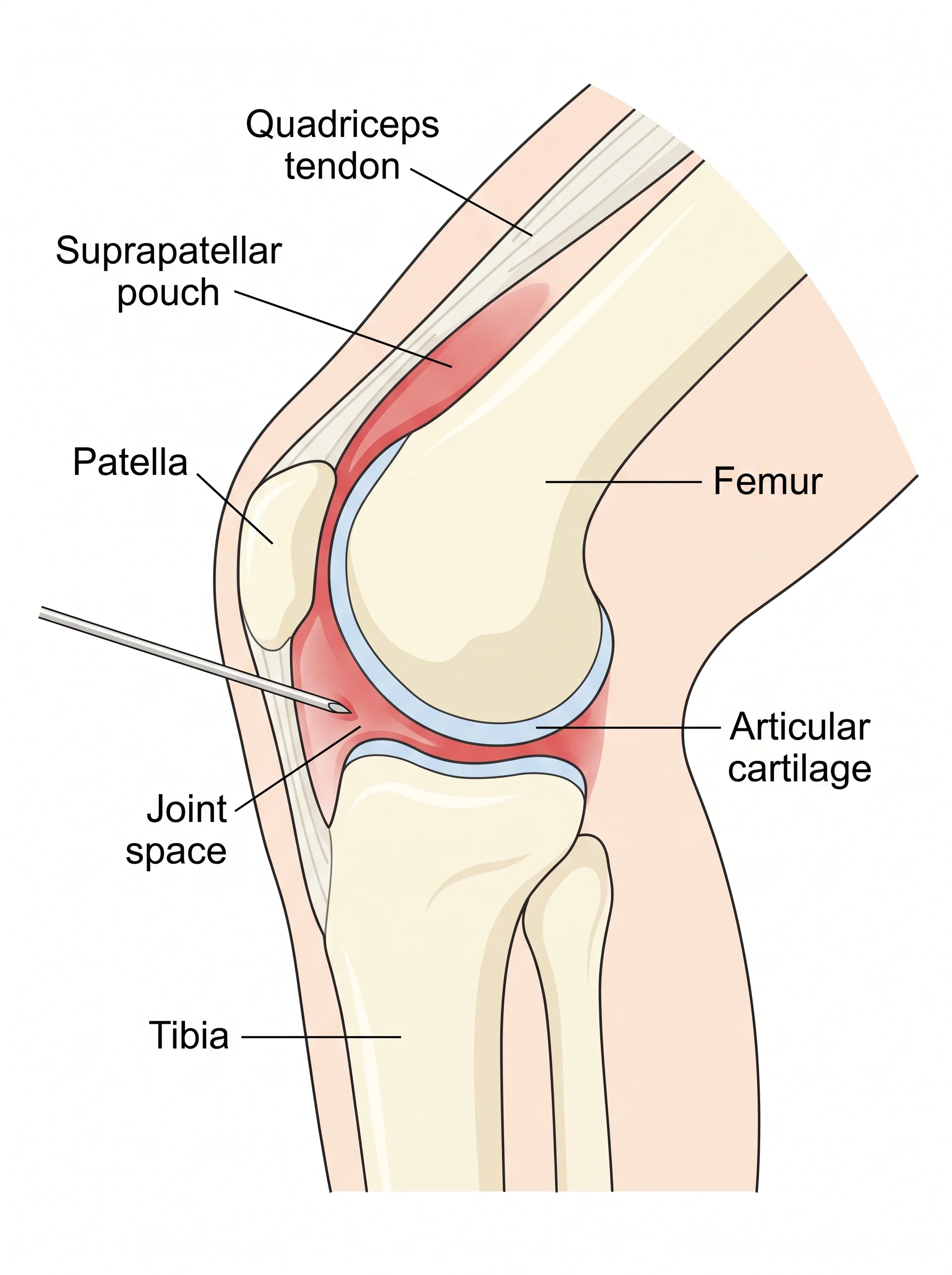
Dr. Robinson provides joint injections in New York, including corticosteroid, hyaluronic acid, and platelet-rich plasma. They are used within non-surgical care to reduce pain and inflammation, alongside physical therapy and activity changes. Dr. Robinson explains what each injection does and where it fits in a treatment plan.
Jonathan Robinson performs joint injections (cortisone/prp) in New York when it is the right step, and reviews every alternative with you first.
What is Joint Injections (Cortisone/PRP)?
Joint injections place medicine directly into or around a joint to reduce pain and inflammation.
They are one part of non-surgical care, not a stand-alone cure.
Common types include corticosteroid, which calms inflammation; hyaluronic acid, which adds lubrication in some arthritic knees; and platelet-rich plasma, or PRP, made by concentrating factors from a sample of your own blood. Each works differently and suits different situations.
Injections are often used alongside physical therapy and activity changes. The right choice depends on the joint, the diagnosis, and your goals.
What happens during Joint Injections (Cortisone/PRP), step by step?
The joint area is cleaned and, when helpful, numbed.
The medicine is placed with careful positioning, sometimes guided by ultrasound or X-ray for accuracy. PRP is prepared by drawing a small blood sample and concentrating it before injection. The visit is usually brief, and Dr. Robinson will explain aftercare for the specific injection.
What is recovery like after Joint Injections (Cortisone/PRP)?
Effects vary by injection type and person.
A corticosteroid injection may ease pain for weeks to months, hyaluronic acid may take a few weeks to help, and PRP responses vary, according to general guidance from the American Academy of Orthopaedic Surgeons. These are ranges, not promises. Injections are tools within a broader plan, and Dr. Robinson will track how you respond and adjust care.
Read the full guide to preparing for surgery →
Your own recovery instructions come from the office and are specific to you. This page describes the general course, not a plan to follow.
What are the treatment options?
- 01Activity changes and physical therapy as the foundation of careActivity changes and physical therapy as the foundation of care.
- 02Anti-inflammatory medicine when appropriateAnti-inflammatory medicine when appropriate.
- 03Corticosteroid injection to reduce inflammation and pain for a periodCorticosteroid injection to reduce inflammation and pain for a period.
- 04Hyaluronic acid injection for lubrication in some arthritic kneesHyaluronic acid injection for lubrication in some arthritic knees.
- 05Platelet-rich plasma in selected cases, discussed with realistic expectationsPlatelet-rich plasma in selected cases, discussed with realistic expectations.
- 06Surgical options, considered only when injections and other non-surgical care no longer coSurgical options, considered only when injections and other non-surgical care no longer control symptoms.
What do patients ask most?
What is the difference between a cortisone shot and PRP?+
How long does a cortisone injection last?+
Is PRP covered by insurance?+
Are joint injections a substitute for surgery?+
Fellowship trained at Lenox Hill Hospital. Sees patients in New York.
About Dr. Robinson →