Total hip replacement is surgery that removes the damaged surfaces of the hip joint and replaces them with an artificial ball and socket. It is usually considered after arthritis or joint damage limits walking, sleep, and daily life, and after non-surgical care has been tried. Most people regain comfortable movement over several months.
Jonathan Robinson performs total hip replacement in New York when it is the right step, and reviews every alternative with you first.
What is total hip replacement?
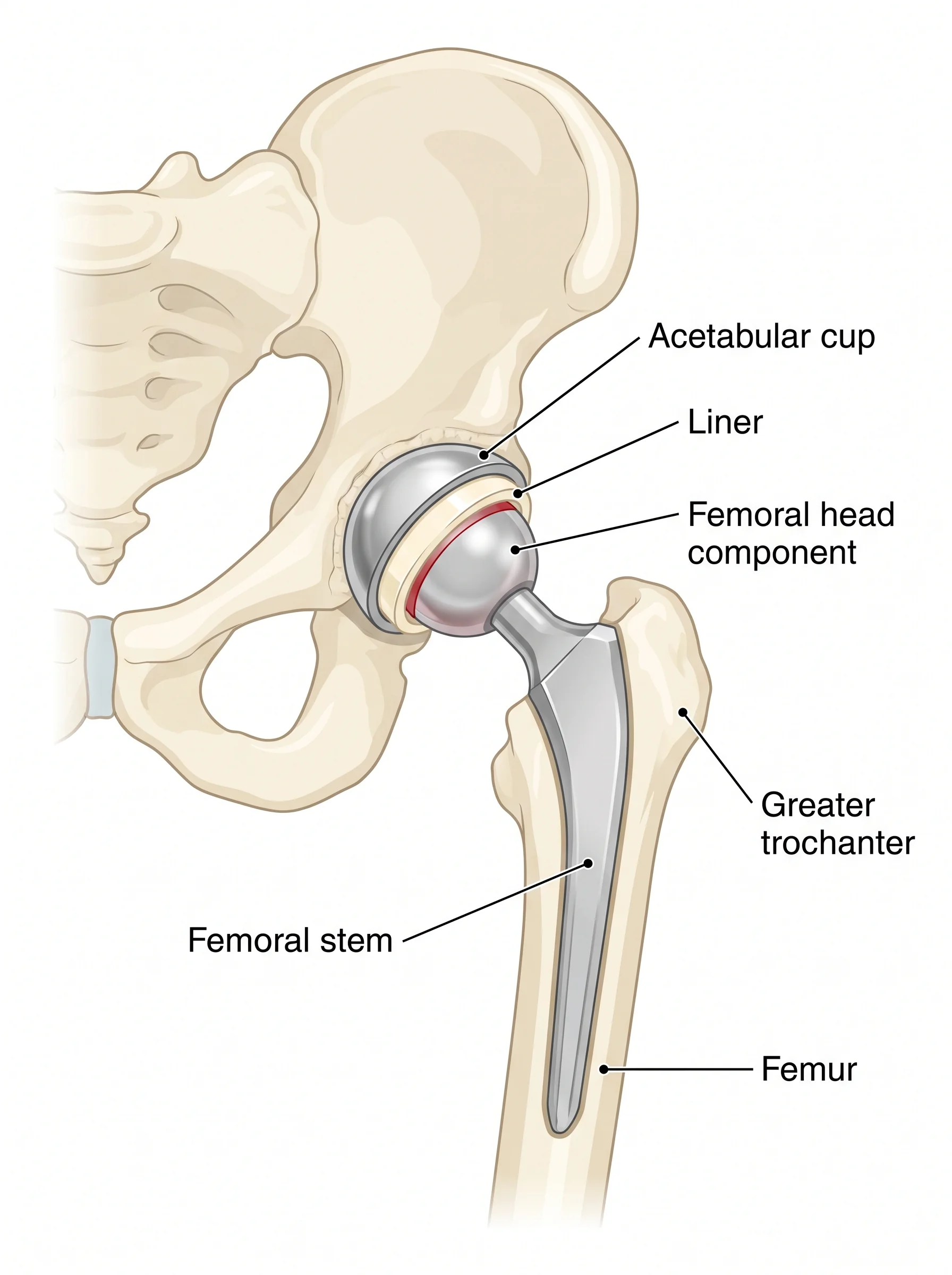
Total hip replacement, also called total hip arthroplasty (arthroplasty means surgical rebuilding of a joint), is a procedure that replaces a worn or damaged hip with an implant.
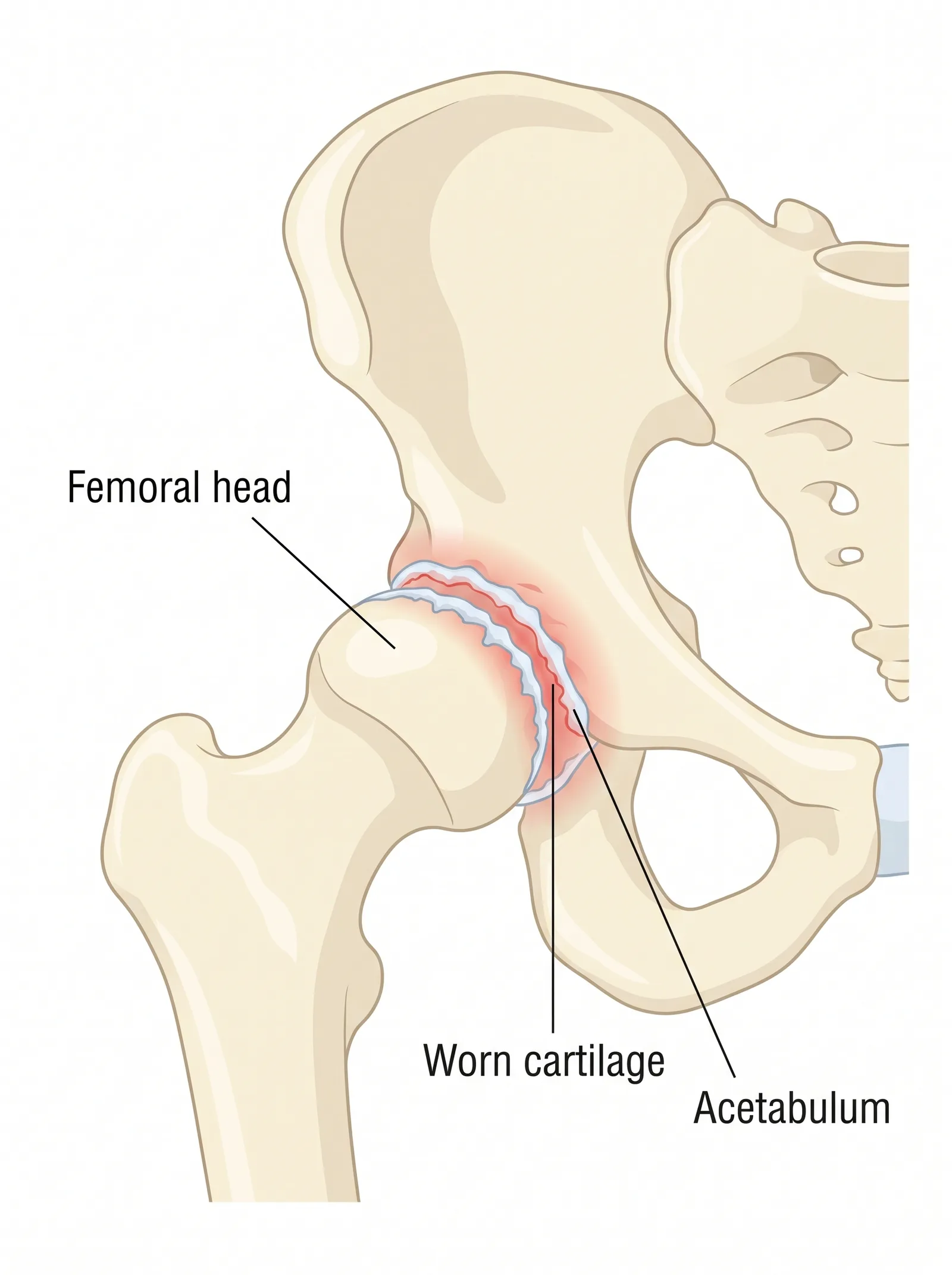
The hip is a ball-and-socket joint. The ball is the top of the thigh bone, called the femoral head. The socket is a cup in the pelvis, called the acetabulum. Smooth cartilage (the soft cushion that covers the ends of bones) lets the ball glide in the socket. When that cartilage wears away, bone rubs on bone, and the joint becomes painful and stiff.
In this surgery, the surgeon removes the worn femoral head and the damaged surface of the socket. A metal stem is placed into the thigh bone, topped with a new ball made of metal or ceramic. A new cup, usually metal with a plastic or ceramic liner, is fitted into the socket. Together these parts form a smooth new joint.
The goal is to reduce pain and restore steady, comfortable movement. It is one of the most common and well-studied orthopedic procedures. Hip replacement is elective in most cases, which means you and your surgeon choose the timing together based on how much the hip affects your life, not on a deadline.
This guide explains what the procedure involves, how recovery tends to unfold, and how to prepare. It is educational and is not a substitute for a visit with a qualified surgeon.
What are the symptoms of Total Hip Replacement, and when should you see a specialist?
People who come to consider hip replacement usually describe a familiar set of problems.
Pain deep in the groin or the front of the hip is the most common. Some feel it in the thigh or the buttock. The pain often gets worse with walking, standing for a while, or getting in and out of a car, and eases with rest.
Other common descriptions include stiffness after sitting, so that the first few steps feel hard. Some people notice they cannot put on socks or shoes easily, or cannot reach their own feet. Others hear or feel a grinding or catching in the joint. Sleep is often disturbed, because lying on the sore hip hurts. Many people start to limp, shorten their walks, or lean on a cane without deciding to.
It is reasonable to see a specialist when hip pain lasts more than a few weeks, limits things you need to do, wakes you at night, or does not improve with rest, activity changes, or over-the-counter pain relief. You do not need to wait until the pain is severe. An earlier visit gives you more options and more time to try non-surgical care first.
Seek care sooner if you cannot bear weight after a fall, if the hip looks deformed, or if you have a fever with hip pain, which can signal an infection. Those situations need prompt evaluation.
How is Total Hip Replacement diagnosed, and what does the visit involve?
The visit starts with your story.
The surgeon will ask where the pain is, what makes it better or worse, how far you can walk, what you can no longer do, and how it affects sleep and mood. These everyday details matter as much as any image.
Next comes a physical exam. The surgeon will watch you walk, check how far the hip moves, and note which motions bring on pain. They will often check your back, knee, and the other hip too, because pain can travel and because more than one joint can be involved.
X-rays are the main imaging test. They show the space between the bones, bone spurs, and the pattern of wear. In hip arthritis, the cushioning space narrows and bone changes appear. Most decisions about hip replacement are made with a good exam and plain X-rays. An MRI, which shows soft tissue in detail, is not usually needed for arthritis but may be ordered if the picture is unclear or another problem is suspected.
The surgeon will also review your general health, medicines, and past surgeries. This helps weigh whether surgery is a safe choice and what to plan around. By the end of the visit you should understand what is causing the pain and what the full range of options is.
When is Total Hip Replacement the right treatment?
Surgery is not the first step.
Most people begin with non-surgical care, and many do well with it for years.
Activity changes come first. Switching from high-impact activity, such as running, to low-impact activity, such as swimming or cycling, can lower pain while keeping you moving. Losing extra weight, when relevant, reduces load on the hip.
Physical therapy helps. A therapist teaches exercises that strengthen the muscles around the hip and keep it moving, which can reduce pain and improve steadiness. A cane, used in the hand opposite the sore hip, can take pressure off the joint.
Medicines can help control pain. Acetaminophen and anti-inflammatory drugs, such as ibuprofen, are common first choices. Your own health decides what is safe, so review any medicine with your physician.
Injections are another step. A corticosteroid injection places anti-inflammatory medicine into the joint and can calm pain for a period of time that varies from person to person. Injections are a tool, not a cure, and there are limits on how often they are used.
Surgery becomes the right conversation when these measures no longer control pain, when the hip keeps limiting the life you want to live, and when X-rays show damage that matches your symptoms. The choice is yours to make with your surgeon, based on your goals.
What happens during Total Hip Replacement, step by step?
Total hip replacement follows a clear sequence, though details vary by surgeon and by the approach used.
Before surgery, you receive anesthesia. This may be general anesthesia, which puts you fully to sleep, or spinal anesthesia, which numbs you from the waist down, often with medicine to keep you relaxed. Your anesthesia team chooses with you.
The surgeon reaches the joint through one of several approaches, which are simply the paths taken to the hip. The posterior approach comes from behind the hip. The anterior approach comes from the front. The lateral approach comes from the side. Each has trade-offs, and no single approach is right for everyone. Your surgeon selects the one that fits your anatomy and their training.
Once the joint is exposed, the surgeon removes the worn femoral head and prepares the socket by clearing the damaged surface. The new cup is placed into the socket. The thigh bone is then shaped to hold the stem, and the stem and new ball are fitted. Some implants press into the bone so that bone grows onto them over time. Others are held with bone cement. The surgeon tests the new joint through its range of motion to check that it moves smoothly and stays stable.
The surgeon then closes the layers of tissue and skin. The whole procedure commonly takes one to two hours, though this varies. Afterward you move to a recovery area where the team watches you wake and begins your first steps, often the same day.
What is the recovery timeline for Total Hip Replacement?
Recovery is best measured by milestones, meaning what you can do, alongside typical time ranges.
The ranges below are general guidance from the American Academy of Orthopaedic Surgeons. These are ranges, not promises. Your path depends on your health before surgery, your rehabilitation, and the demands of your daily life.
First milestone: standing and stepping. Most people stand and take steps with a walker or crutches on the day of surgery or the day after. Many go home the same day or within a day or two.
Second milestone: walking with support around the house. In the first days to weeks, the goal is safe, steady movement with an aid. You can care for yourself with some help and start gentle exercises given by your team.
Third milestone: walking without an aid. Many people move from a walker to a cane and then to walking on their own over several weeks, as strength and balance return. According to general guidance from the American Academy of Orthopaedic Surgeons, many patients resume light daily activities within several weeks.
Fourth milestone: returning to fuller activity. Return to low-impact activities such as walking for exercise, cycling, or swimming commonly happens over roughly the first few months, according to general guidance from the American Academy of Orthopaedic Surgeons. Comfort and strength often keep improving for up to a year.
The milestones matter more than the calendar. You are ready for the next step when you can do the current one safely and with control, which your surgical team will help you judge.
Read the full guide to preparing for surgery →
Your own recovery instructions come from the office and are specific to you. This page describes the general course, not a plan to follow.
How should you prepare for surgery?
Good preparation makes recovery smoother.
Handle these before the day of surgery.
Home setup. Clear walking paths and remove loose rugs and cords that could trip you. Put items you use often within easy reach so you do not bend or twist too far. A raised toilet seat, a shower chair, and grab bars can help. Set up a comfortable place to rest with room for a walker.
Transportation. You cannot drive yourself home. Arrange a ride for the day of surgery and for early follow-up visits until your team clears you to drive again.
Time off. Plan time away from work based on your job. Desk work usually allows an earlier return than work that involves standing, lifting, or driving. Ask your surgeon what fits your situation.
Who to have available. Arrange for an adult to stay with you for at least the first day or two at home, and to help with meals, errands, and pets while you regain steadiness. Prepare simple meals ahead of time.
Health preparation. Follow your team's instructions on which medicines to pause and when to stop eating and drinking before surgery. If you smoke, stopping before surgery supports healing. Bring a list of your medicines and any mobility aids you already use.
Which warning signs should you call about?
Most recoveries go smoothly, but knowing the warning signs keeps you safe.
Call your surgeon's office if you notice any of the following.
Signs of possible infection: a fever, increasing redness or warmth around the incision, fluid or pus draining from the wound, or pain that is getting worse rather than better.
Signs of a possible blood clot: new pain, swelling, tenderness, or redness in the calf or leg. A clot in the leg needs prompt care.
Other reasons to call: the hip feels like it slips or pops out of place, you cannot bear weight when you could before, the incision opens, or your pain is not controlled by your plan.
Seek emergency care right away, by calling your local emergency number, if you have chest pain, sudden shortness of breath, or trouble breathing, which can signal a clot that has traveled to the lungs. This is an emergency.
Keep your surgeon's office number and after-hours contact somewhere easy to find before you go home. When in doubt, call. The office would rather answer an early question than see a problem grow.
What results can you expect from Total Hip Replacement?
Total hip replacement is a well-studied procedure with a long track record.
According to general guidance from the American Academy of Orthopaedic Surgeons, hip replacement reliably reduces pain and improves the ability to do daily activities for most people who have it. Reported satisfaction is high, though no procedure helps everyone equally.
On implant durability, general guidance from the American Academy of Orthopaedic Surgeons notes that modern hip implants last many years for most patients, and that a share of implants may eventually loosen or wear and need revision, which is a second surgery to repair or replace parts. Longevity depends on age, weight, activity, and other factors, so figures are ranges, not guarantees for any one person.
Serious complications, such as infection, blood clots, dislocation, or difference in leg length, are uncommon but possible, according to general guidance from the American Academy of Orthopaedic Surgeons. Your surgical team takes specific steps to lower these risks and will review them with you.
The honest summary: most people gain lasting pain relief and better movement, the results tend to hold for many years, and a minority face complications or need further surgery over a lifetime. These are ranges drawn from general orthopedic guidance, not promises about your result.
What do patients ask most?
How long will my new hip last?+
Will I set off airport metal detectors?+
When can I drive again?+
Can I kneel, bend, or cross my legs?+
Does insurance cover hip replacement?+
Fellowship trained at Lenox Hill Hospital. Sees patients in New York.
About Dr. Robinson →