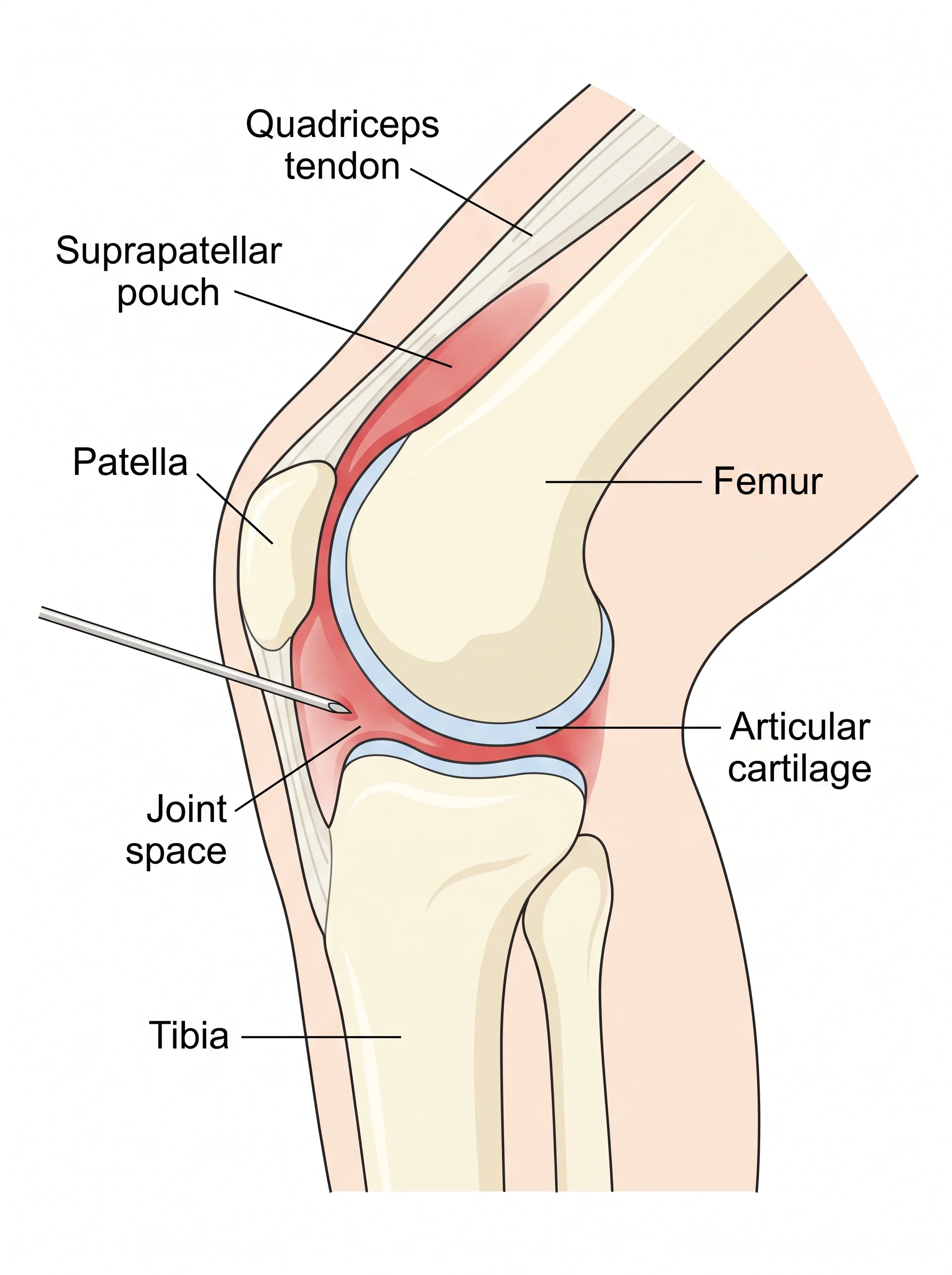
Joint injections deliver medicine directly into or around a joint to reduce pain and inflammation. Cortisone injections use a steroid to calm inflammation. PRP uses a concentrated part of your own blood. Both are non-surgical options used as part of a broader treatment plan.
Jonathan Robinson performs joint injections (cortisone/prp) in New York when it is the right step, and reviews every alternative with you first.
What is Joint Injections (Cortisone/PRP)?
Joint injections are treatments that place medicine directly into or around a joint to reduce pain and inflammation.
Inflammation (say: in-fluh-MAY-shun) is the body's response to irritation or injury, and it often causes the pain, swelling, and stiffness of joint problems. By delivering medicine right to the source, an injection can calm a joint more directly than a pill.
This page covers two common types:
- Cortisone injections. Cortisone is a type of corticosteroid, a medicine that reduces inflammation. Injected into or around a joint, it can quiet inflammation and ease pain, sometimes for weeks or months. It is used for conditions like arthritis (wear of the joint surface), tendon irritation, and bursitis (inflammation of the small fluid-filled sacs that cushion a joint). - PRP injections. PRP stands for platelet-rich plasma. It is made from a small sample of your own blood, which is spun in a machine to concentrate the platelets, the part of blood that carries factors involved in healing. This concentrate is then injected into the injured area. PRP is used for certain tendon problems and some joint conditions, with the aim of supporting the body's own repair.
An orthopedic surgeon (a doctor who treats bones, joints, and the tissues around them) or a member of the care team performs these injections in the office. They are non-surgical and are usually part of a larger plan that includes activity changes, therapy, and other conservative steps. An injection is rarely the whole answer on its own. It is a tool that can reduce pain enough to let you move, exercise, and take part in the rest of your care.
It helps to understand what injections can and cannot do. They can reduce pain and inflammation and, for some people, delay or avoid the need for surgery. They do not regrow a worn joint surface or cure arthritis. Your specialist will explain what a given injection is meant to do in your case, so your expectations match the goal.
What are the symptoms of Joint Injections (Cortisone/PRP), and when should you see a specialist?
You do not select an injection by symptoms alone.
It is one option a specialist may offer for joint or tendon pain that has not settled with simpler steps. Still, it helps to know the kinds of problems that lead people to seek care.
Common symptoms that bring people in include:
- Joint pain that limits walking, climbing stairs, gripping, or reaching. - Stiffness, especially in the morning or after sitting. - Swelling or warmth in a joint. - Pain around a tendon that worsens with certain movements, such as at the elbow, shoulder, or knee. - Pain that has not improved after weeks of rest, activity changes, or over-the-counter measures.
See a specialist if:
- Joint or tendon pain has lasted several weeks despite rest and simple measures. - Pain is interfering with your daily activities, work, sleep, or exercise. - A joint is swollen, and you want to understand why. - You have been managing arthritis and your usual steps are no longer controlling the pain.
Seek prompt care, rather than waiting for a routine visit, if a joint becomes suddenly hot, red, and very painful, especially with a fever, since this can signal an infection that needs urgent attention rather than an injection.
An injection is not usually the first step. Specialists typically start with conservative measures, which we cover below, and consider an injection when those are not enough. If you are unsure whether your joint pain is worth being seen for, the office can help you decide. Getting checked lets you understand what is causing the pain and what the full range of options is, of which injections are one.
How is Joint Injections (Cortisone/PRP) diagnosed, and what does the visit involve?
Before recommending an injection, a specialist works to understand what is causing your pain, because the right treatment depends on the diagnosis.
The visit begins with your story. The specialist asks where it hurts, when the pain started, what makes it better or worse, and how it affects your daily life. They ask what you have already tried, such as rest, over-the-counter medicine, or therapy. This helps judge whether an injection is a sensible next step.
The exam follows. The specialist looks at the joint for swelling and warmth, checks how it moves, and presses to find the tender spot. They may test strength and do specific movements that point to a particular tendon or structure. This careful exam often reveals the source of the pain.
Imaging may be used to confirm the cause:
- X-rays show the joint's bone and can reveal arthritis or other changes. - An MRI (a scan that uses magnets to show soft tissue in fine detail) or an ultrasound (a scan that uses sound waves to show soft tissue) can show tendons, ligaments, and inflammation, and is sometimes used to guide an injection precisely.
Understanding the diagnosis shapes the choice of injection. Cortisone is often chosen to calm inflammation from arthritis or bursitis. PRP is considered for certain tendon problems or specific joint conditions where supporting healing is the goal. Your specialist will explain which fits your case and why, and what to realistically expect from it.
By the end of the visit, you should understand what is causing your pain, whether an injection is a good option, which type is recommended, and how it fits into your overall plan. Ask what the injection is meant to do, how long relief may last, and what the alternatives are.
What happens during Joint Injections (Cortisone/PRP), step by step?
Knowing what happens during a joint injection can ease any worry.
Here is the usual sequence. Details vary by joint and by whether you are receiving cortisone or PRP, and your specialist will explain what is specific to you.
For a cortisone injection:
First, preparation. You are positioned so the joint is easy to reach, and the skin over the site is cleaned to lower infection risk. The specialist may mark the exact spot by feel or use ultrasound to guide the needle.
Second, numbing. A local numbing medicine may be applied or injected to reduce discomfort at the site. Some injections include a numbing medicine mixed with the cortisone.
Third, the injection. The specialist places the needle into or around the joint and injects the medicine. You may feel pressure or a brief ache. In some cases, if the joint is swollen with excess fluid, the specialist first draws off some fluid, which can itself relieve pressure, before injecting the medicine.
Fourth, finishing. The needle is removed, a small bandage is placed, and you are given after-care instructions. The whole process usually takes only a few minutes.
For a PRP injection, there are a few extra steps:
First, a blood draw. A small sample of your blood is taken, much like a routine blood test.
Second, preparation of the PRP. The blood is placed in a machine that spins it to concentrate the platelets, the part involved in healing. This takes several minutes and produces a small amount of platelet-rich plasma.
Third, the injection. The site is cleaned and, often, guided by ultrasound, the concentrated PRP is injected into the injured tendon or joint. As with cortisone, you may feel pressure or a brief ache.
Fourth, finishing. A bandage is applied and you receive after-care instructions.
Both injections are done in the office, and you go home the same day. You may be advised to rest the area for a short time. With PRP, you may be asked to avoid anti-inflammatory medicines for a period, since the goal is to let the natural healing response work; your specialist will give exact guidance.
What is the recovery timeline for Joint Injections (Cortisone/PRP)?
What to expect after a joint injection depends on the type, and progress is best judged by how the joint feels and functions, not only by the date.
The ranges below reflect general guidance from the American Academy of Orthopaedic Surgeons (AAOS) and are ranges, not promises. Your body and your condition shape your response.
After a cortisone injection:
First day or two. The goal is to let the area settle. It is common to feel some soreness at the injection site at first, and occasionally a brief flare of pain before the medicine takes effect. You are doing fine when you rest the area as advised and the soreness eases. Ice can help.
Roughly days two to seven. The goal is the onset of relief. Cortisone often begins to reduce pain within a few days, per general AAOS guidance. You are progressing when joint pain and stiffness lessen and you can move more comfortably. This is the window to resume or advance therapy.
Weeks to months. The goal is to use the relief well. Cortisone relief can last from weeks to a few months, per general AAOS guidance, and varies widely from person to person. These are ranges, not promises. You are getting the most from it when you use the lower-pain period to strengthen the joint and keep up conservative care.
After a PRP injection:
First week. The goal is to allow the healing response to begin. Some soreness or mild swelling at the site is common at first, since PRP works partly by prompting the body's repair process. You are doing fine when you follow rest and activity guidance and any advice about which medicines to avoid.
Weeks to months. The goal is gradual improvement. PRP typically works slowly, and any benefit tends to build over weeks to months rather than right away, per general AAOS guidance. You are progressing when pain gradually eases and function improves over that period. These are ranges, not promises, and responses vary.
For both, milestones that show real progress include moving the joint with less pain, returning to activities and exercise, and being able to advance your therapy. Reaching these on your own timeline is the aim. Your specialist will follow up to see how you responded and to plan the next step, whether that is continued conservative care, a repeat injection where appropriate, or another option.
Read the full guide to preparing for surgery →
Your own recovery instructions come from the office and are specific to you. This page describes the general course, not a plan to follow.
How should you prepare for your visit?
A joint injection is an office procedure, and a little preparation helps it go smoothly.
Before your visit, gather your history. Note where and how long you have had the pain, what you have already tried, and how it affects your daily life. Bring a list of your medicines, supplements, and allergies. Tell the office ahead of time if you take a blood thinner, since that may need to be considered before an injection.
Share relevant health details. Let your specialist know if you have diabetes, since cortisone can briefly raise blood sugar, or if you have any infection or fever, since an injection may be delayed until you are well. If you are receiving PRP, mention any medicines that affect platelets or bleeding.
Plan around the injection. Most people can drive themselves to and from a simple joint injection, but ask your office, since it depends on the joint and whether numbing medicine is used. For an injection in a weight-bearing joint, it can help to have an easy day planned afterward. Wear clothing that gives easy access to the joint, such as loose shorts for a knee or a short-sleeved shirt for an elbow or shoulder.
Know the after-care plan in advance. Ask whether you should rest the area, apply ice, or avoid certain medicines, especially with PRP. Knowing this before you arrive helps you plan your day.
Prepare your questions. Helpful ones include: What is this injection meant to do for me? How long might relief last? What are the risks? Can I return to my normal activity, and when? What is the next step if it does not help enough? Writing these down means you leave with clear guidance.
If you have questions about what your insurance covers, especially for PRP, which is not always covered, our office staff can walk you through your coverage. Ask them directly before the procedure.
Which warning signs should you call about?
Joint injections are generally safe office procedures, but a few signs deserve prompt attention.
Knowing them helps you act if needed.
Call the office, or seek care, if in the days after an injection you notice:
- Increasing pain, redness, warmth, and swelling in the joint, especially with a fever or chills. These can signal an infection, which is uncommon but needs prompt attention. - Pain at the injection site that keeps getting worse instead of settling after the first day or two. - Drainage from the injection site. - For those with diabetes, blood sugar that runs high for a few days after a cortisone injection, so you can manage it with your doctor.
A brief flare of pain in the first day or two after a cortisone injection, before the medicine takes effect, is common and usually settles with rest and ice. This is different from the rising pain and redness of an infection, which is a reason to call.
Seek emergency care for any signs of a severe allergic reaction after an injection, such as trouble breathing, swelling of the face or throat, or a widespread rash. This is rare but needs immediate attention.
The rule is simple: rising pain with redness and warmth, a fever, or any trouble breathing is never something to wait out. Call, or seek urgent care. Keep the office phone number where you can find it, and know where the nearest emergency room is. For routine questions, such as whether the injection is working as expected or when to follow up, the office is glad to help during regular hours. No question is too small.
What results can you expect from Joint Injections (Cortisone/PRP)?
Joint injections can provide meaningful relief for many people, though results vary and injections are one part of a larger plan.
The findings below reflect general guidance from the American Academy of Orthopaedic Surgeons (AAOS) and are general ranges, not promises about any one person.
For cortisone injections:
- Cortisone can reduce joint pain and inflammation, with relief that commonly lasts from weeks to a few months, per general AAOS guidance. Responses vary widely. These are ranges, not promises. - Relief is often temporary, and cortisone does not repair a worn joint or cure arthritis. It can, however, create a window of lower pain that lets you move and take part in therapy. - There are limits on how often cortisone is given in the same joint, since repeated injections over time may affect nearby tissue, per general AAOS guidance. Your specialist will space injections thoughtfully.
For PRP injections:
- PRP aims to support the body's own healing, and any benefit tends to build gradually over weeks to months, per general AAOS guidance. Evidence varies by condition, and research continues. - Because it uses your own blood, the risk of an allergic reaction is low. As with any injection, there is a small risk of infection or soreness. - PRP is not always covered by insurance, so it is worth confirming coverage with the office before proceeding.
Your own result depends on your diagnosis, your health, and how the injection fits with the rest of your care. Injections work best combined with therapy, activity changes, and the other conservative steps in your plan. We will follow up to see how you responded and adjust the plan, whether that means continued conservative care, a repeat injection where appropriate, or another option. The aim is to reduce your pain enough to keep you moving and active.
What are the treatment options?
- 01Activity changesAdjusting or briefly resting from activities that aggravate the joint gives irritated tissue a chance to settle.
- 02Physical therapyGuided exercises (called physical therapy) build the strength and flexibility that support a joint and can reduce pain over time. For many tendon and joint problems, this is a cornerstone of care.
- 03Over-the-counter measuresAnti-inflammatory medicines, when appropriate for you, along with ice or heat, can ease symptoms. Your specialist can advise what is safe given your health.
- 04Supports and footwearBraces, straps, or supportive shoes can offload a painful joint or tendon.
- 05Weight managementFor weight-bearing joints like the knee and hip, reducing load through the joint can meaningfully ease symptoms over time.
What do patients ask most?
What do patients ask about Joint Injections (Cortisone/PRP)?+
Fellowship trained at Lenox Hill Hospital. Sees patients in New York.
About Dr. Robinson →